

INTRODUCTION
Blood Collection is a procedure of obtaining blood from the blood vessels. For tested of blood related disorders, metabolic disorders and various infection.
Method of blood Collection
There are three different way of obtain the blood depending upon the site of blood Collection and volume of blood required for the test .
- Capillary blood Collection.
- Venous blood Collection.
- Artery blood Collection.
Capillary blood Collection.
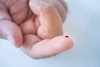
Capillary blood is obtained by pricking the tip of finger, love of ear, from the toe, and in infant it is obtained from the heel.


Venous blood Collection
When large quantity of blood is required, it is obtained from the vein. generally vein of the anticubital fossa (in arm) is used. There are three veins passing through arm. These are cephalic vein, basilic vein, medialcubital vein. any prominent vein is used for the collection of blood.

Necessary material
- Needle
- Syringe
- Tourniquet
- Disinfectant
- Cotton
- Blood Collection tube
- Marker
Needle
The needle bore size should be 18-20 gauge for adults and 22-23 gauge for children.and length of needle should be 20 mm for adults and 15mm for children.
Syringe
Syringe of different capacities like 2ml, 5ml, 10ml, 20ml are available.
The size of the syringe should be selected on the basis of amount of blood require for testing.

Tourniquet
It may be soft rubber tube or belt. It is applied to arm about 3 fingers above the anticubital fossa.
Function- it helps to slow the blood flow and makes vein more prominent.

Spirit
To clean and disinfect the site of puncture spirit are use .it may be 70%alcohol
Blood Collection tube
Blood Collection tube use for collection and storage of blood. 

Procedure
- Talk to patient setting in comfortable position.
- Verify the TRF form and check the patient name and ID number.
- Decide the amount of blood require and select the container according to the test to be done.
- Now ensure the patient what is to be done.
- Lay the arm of the patient on the table.
- Apply the tourniquet and select the prominent vein of the patient.
- With the help of cotton and disinfectant clean the anticubital fossa.
- Assemble needle and syringe , check that it is sharp and unblock,and it is moving smoothly.
- With the left hand hold patient arm ask the patient to open and close the wrist.
- Take the syringe in right hand holding index finger against the base of the needle.
- The angle between skin and needle should not be more than 30-40°.
- Insert the needle into the vein slowly.
- Pull back the Piston till required amount of blood is obtained in the syringe.
- Now remove the tourniquet place cotton swab over the puncture site.
- Remove the needle from the syringe.
- Gently expel the blood into appropriate container.
Complications of venepuncture
1 :- hematoma
This type of complication is caused by blood leaking into the tissue. a common sign of this complication occuring is swelling at or near the venepuncture site.

2:- Haemoconcentration
This can result from prolonged tourniquet used.
ARTERIAL BLOOD COLLECTION
- An arterial blood sample is collected from artery .
- Arterial blood sample is used to determine arterial blood gases.
- Arterial blood sampling should only be performed by doctors
- Redial artery is used for arterial blood collection which is located on the thumb side of the wrist.



15 Comments
It helps a lot thanku for this
ReplyDeleteAwesome bro
ReplyDelete👍
DeleteGreat job sanjay .
ReplyDeleteYou explained it very well .👍👍🙌
Thanks
ReplyDeleteVery good
ReplyDeleteThanks
DeleteVery good thank
ReplyDeleteThanks
DeleteWow sanjay ji
ReplyDeleteNice
ReplyDeleteThanks
DeleteNice bhai
ReplyDeleteKeep it up👍
ReplyDeleteThanks
ReplyDelete